
A jacaranda walk from Milsons Point to North Sydney
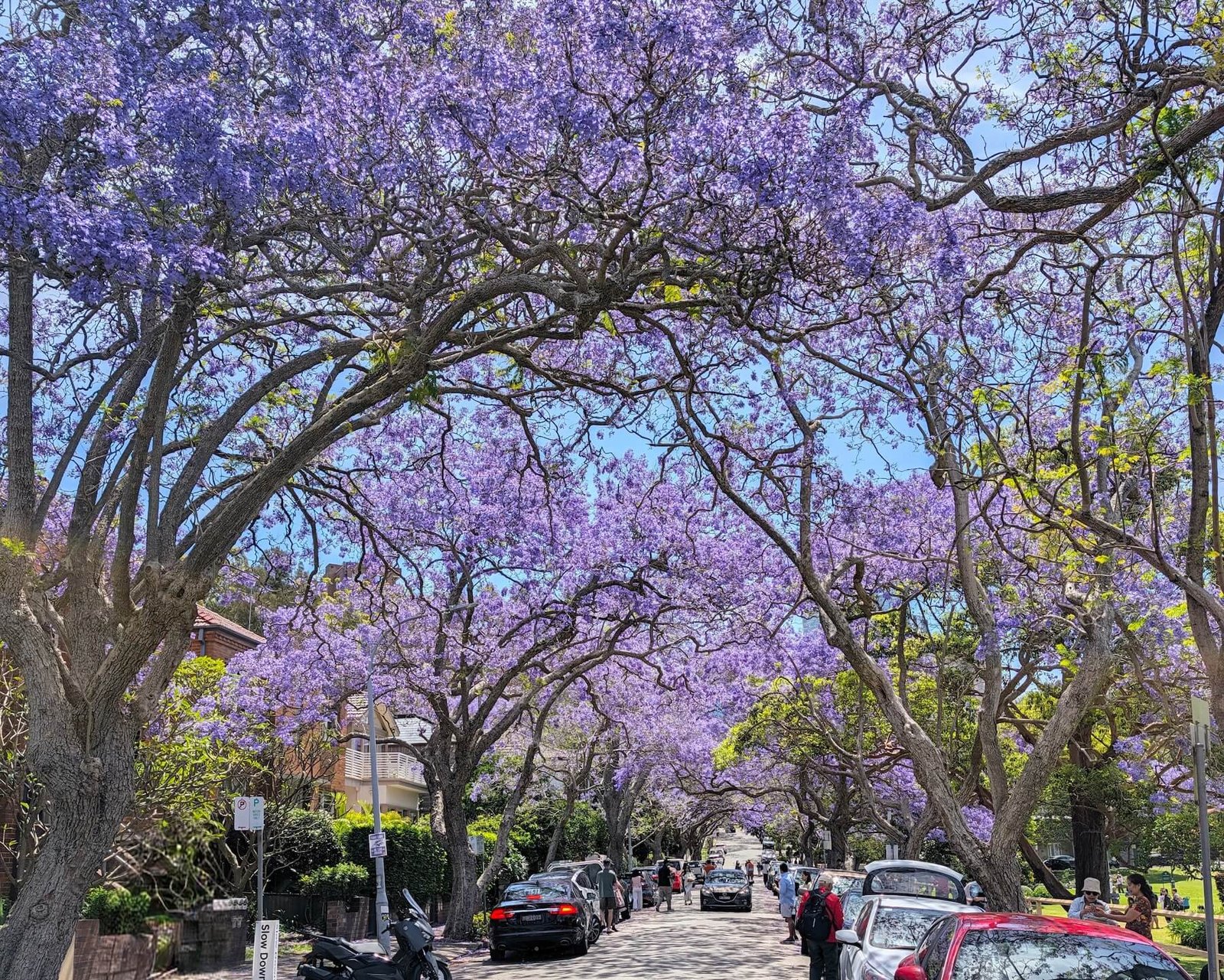
If you love jacarandas, you really can’t beat North Sydney. We do this walk every year, following the purple blooms through parks, harbour paths and residential streets across the Lower North Shore.
On Saturday 31 October 2026, we hosted a free OZ Outdoors group walk with over 30 people. We also celebrated TrekMeet’s launch and used the app to organise and record our walk.
Here are five of our favourite stops, plus a bonus tree worth visiting. You can follow the full route or choose a few places for a shorter walk.
Before you head out
- Distance: About 10 km. Our recorded route was 9.9 km.
- Difficulty: Easy to moderate, with urban streets, park paths, hills and some stairs.
- Start: Outside Milsons Point railway station on the Kirribilli side, at Ennis Road.
- Finish: North Sydney, with train and metro options for getting home.
Wear comfortable walking shoes, bring water and keep your phone or camera charged. Leave yourself plenty of time for photos and breaks. There are several places to leave the route early if you prefer a shorter outing.
1. Clark Park, via Wendy’s Secret Garden
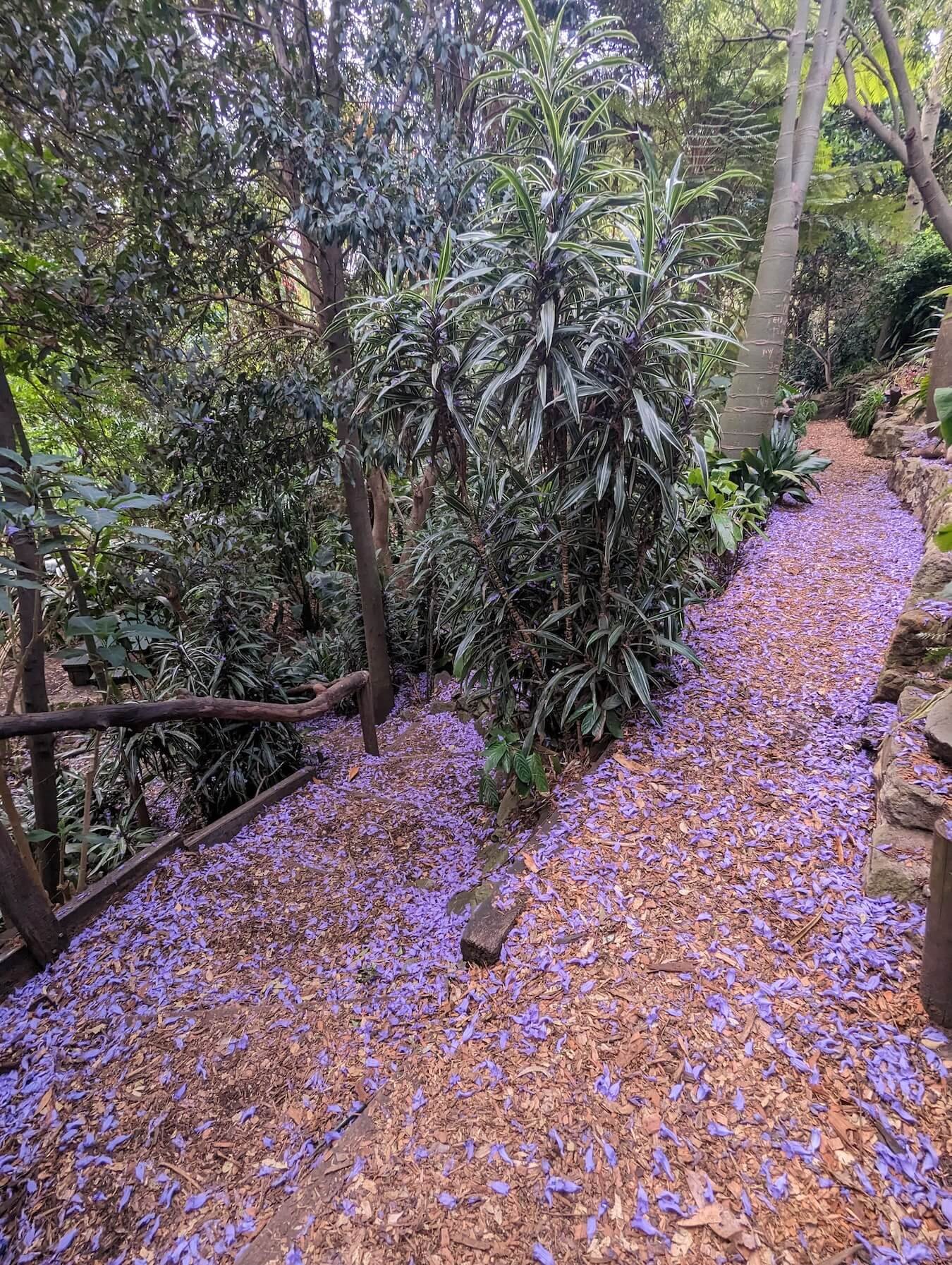
From Milsons Point station, head towards Lavender Bay and Wendy’s Secret Garden. Around 10 minutes from the station, this part of the walk takes you through greenery and paths scattered with fallen jacaranda flowers.
Continue towards Clark Park, where you can enjoy the blooms with views towards the Harbour Bridge. Take your time through the garden, as there are steps and narrow paths along the way.
2. Watt Park
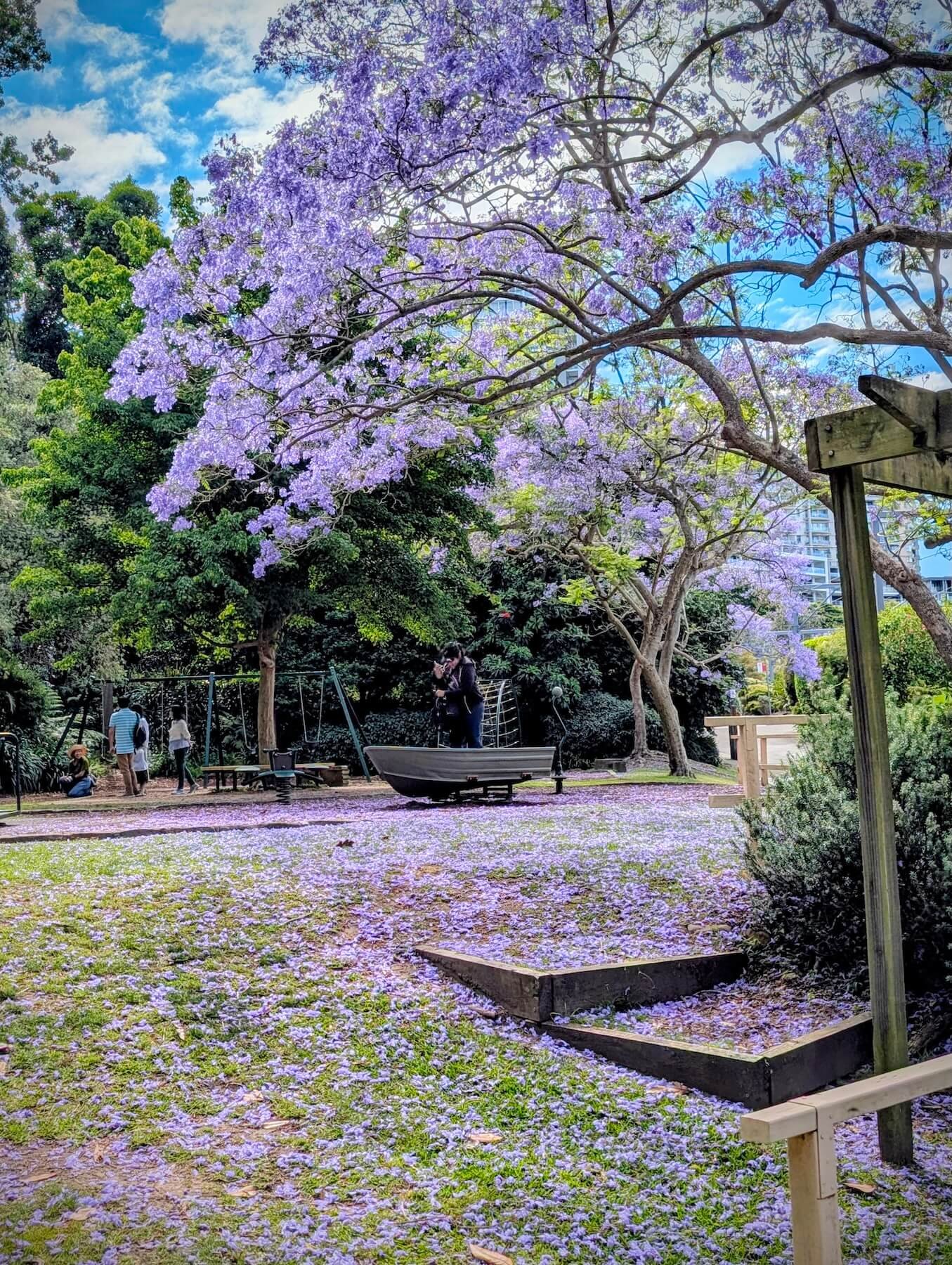
A further five-minute walk brings you to Watt Park, a peaceful stop tucked into the Lavender Bay parklands.
During peak bloom, the fallen flowers can cover the grass like a purple carpet. There’s a playground here too, making it a good place to pause before continuing towards Kirribilli.
3. Carabella Street and Holbrook Avenue
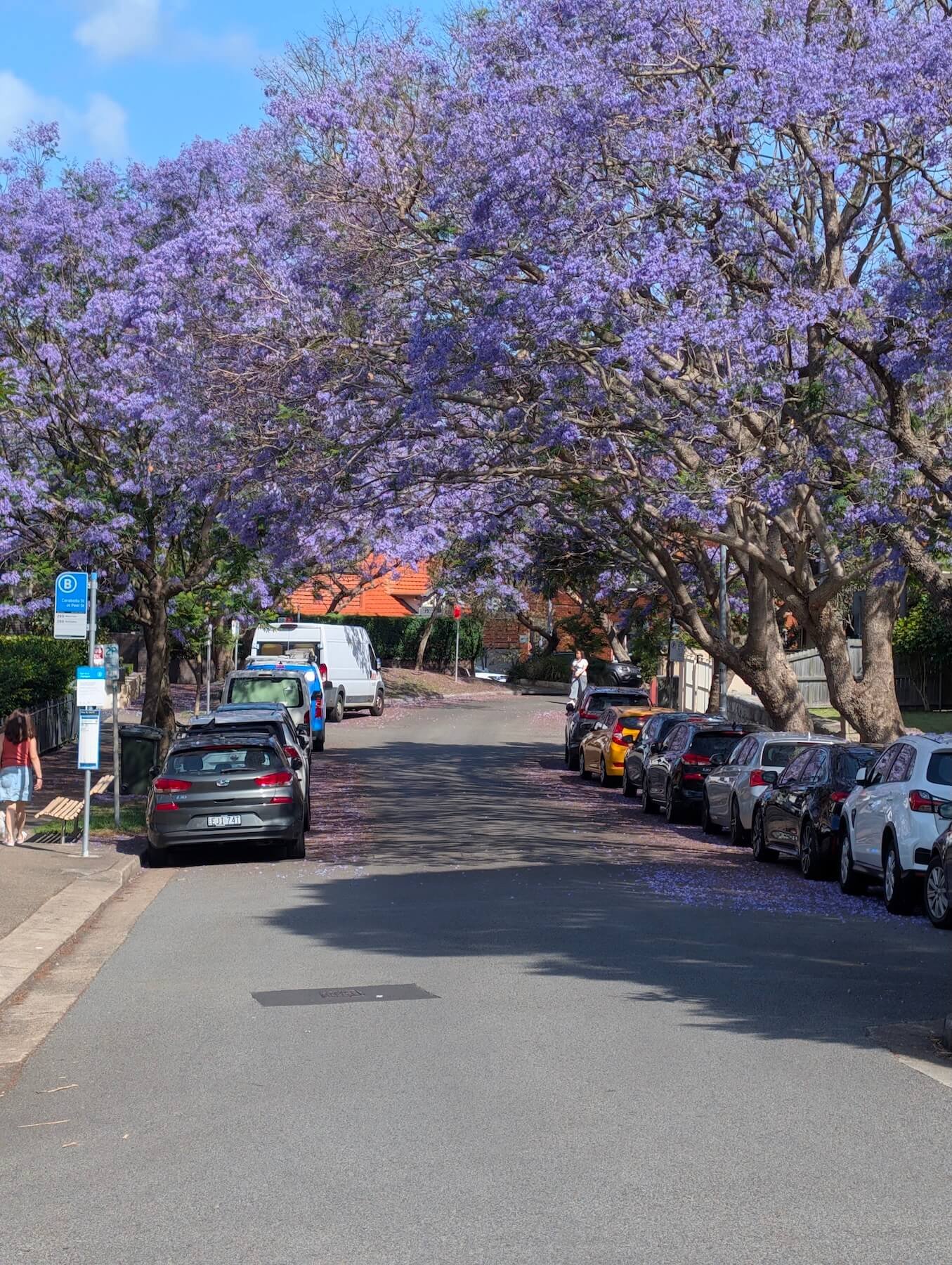
Continue alongside the harbour, walk past Luna Park and make your way towards Kirribilli. Follow Kirribilli Avenue, which also has jacarandas along the route.
The intersection of Carabella Street and Holbrook Avenue is lovely to wander around during the season. There’s another jacaranda tunnel here that not many people know about. Take your time to admire the colours and look along the side streets as you go.
These are residential streets, so please keep driveways and footpaths clear when stopping for photos.
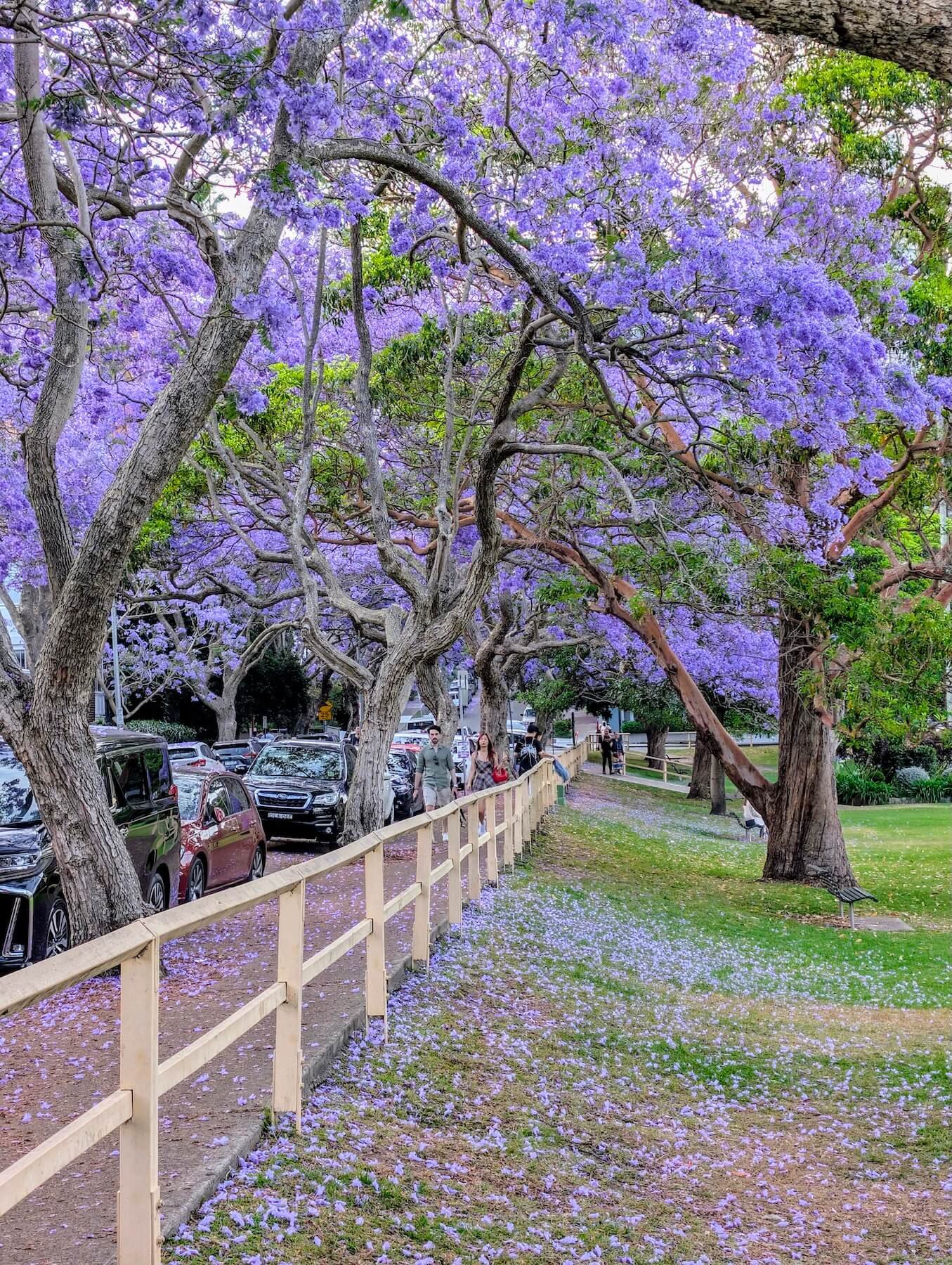
4. McDougall Street and Milson Park
About 10 minutes further on, you’ll reach the familiar jacaranda tunnel on McDougall Street, beside Milson Park.
The branches arch over the road, while the park gives you another view of the trees from beneath their canopy. It’s worth walking along both the street and the park side to see the flowers from different angles.
This is a popular stop, so expect more people here. Please stay aware of traffic and follow any signs or directions from traffic controllers.
Visitor note: Council announces seasonal weekend road closures around McDougall Street. For 2026, the notice lists closures from 31 October, between 7 am and 7 pm, for approximately six weeks. Some vehicle access remains. Check the council’s current notice before visiting.
5. Forsyth Park
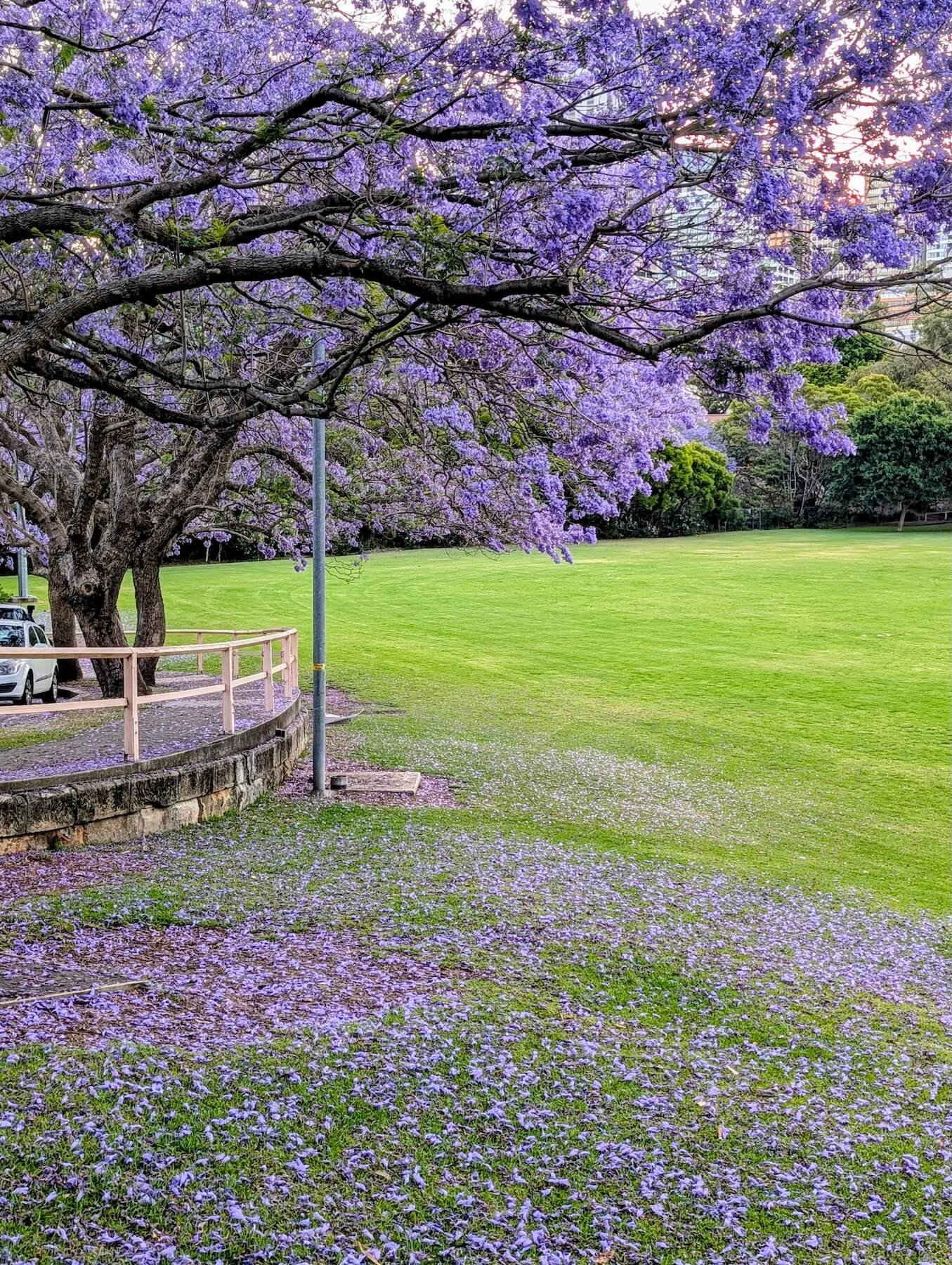
Continue for around 15 minutes to reach Forsyth Park, another stop we enjoy on this walk.
It has plenty of space, purple blooms and a large playground. It’s usually less crowded than McDougall Street, making it a good place to relax before the final part of the route. There’s also a lookout just above the community centre with a view of the Harbour Bridge.
A bonus stop at Bent Street and Yeo Street
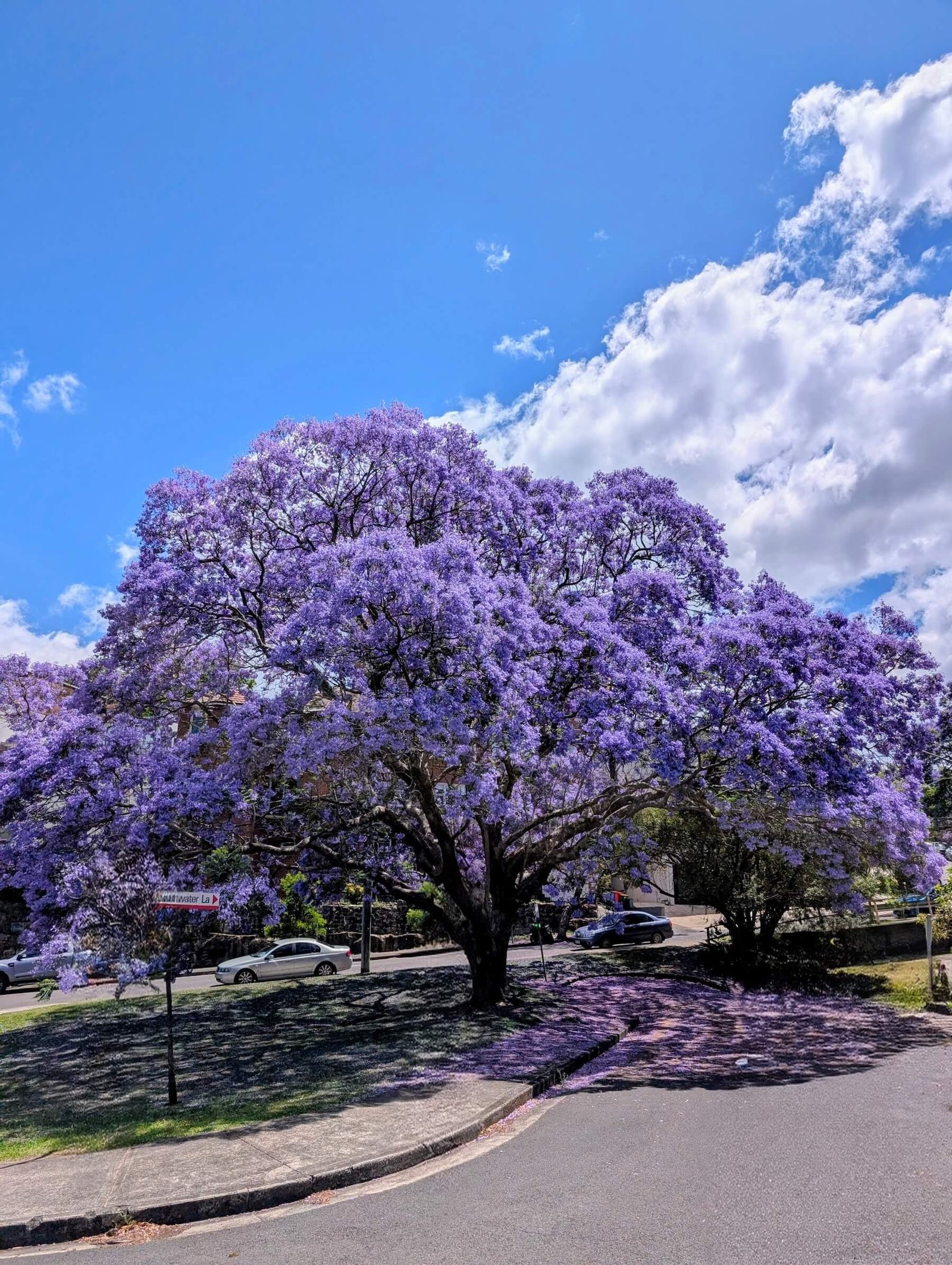
If you’d like to keep going, walk another 10 minutes towards the corner of Bent Street and Yeo Street.
There’s a large jacaranda here with a broad, rounded canopy. In full bloom, it’s worth the extra walk. Give yourself a little time to enjoy this one before heading back towards North Sydney.
Finishing the walk
From here, continue towards North Sydney via the pedestrian connection between Alfred Street North and Ridge Street, with harbour views along the way.
You can finish with a drink or meal at one of the local pubs, or head home by train or metro. Our event’s suggested finish was near the Greenwood Hotel.
Follow our route or join us next time
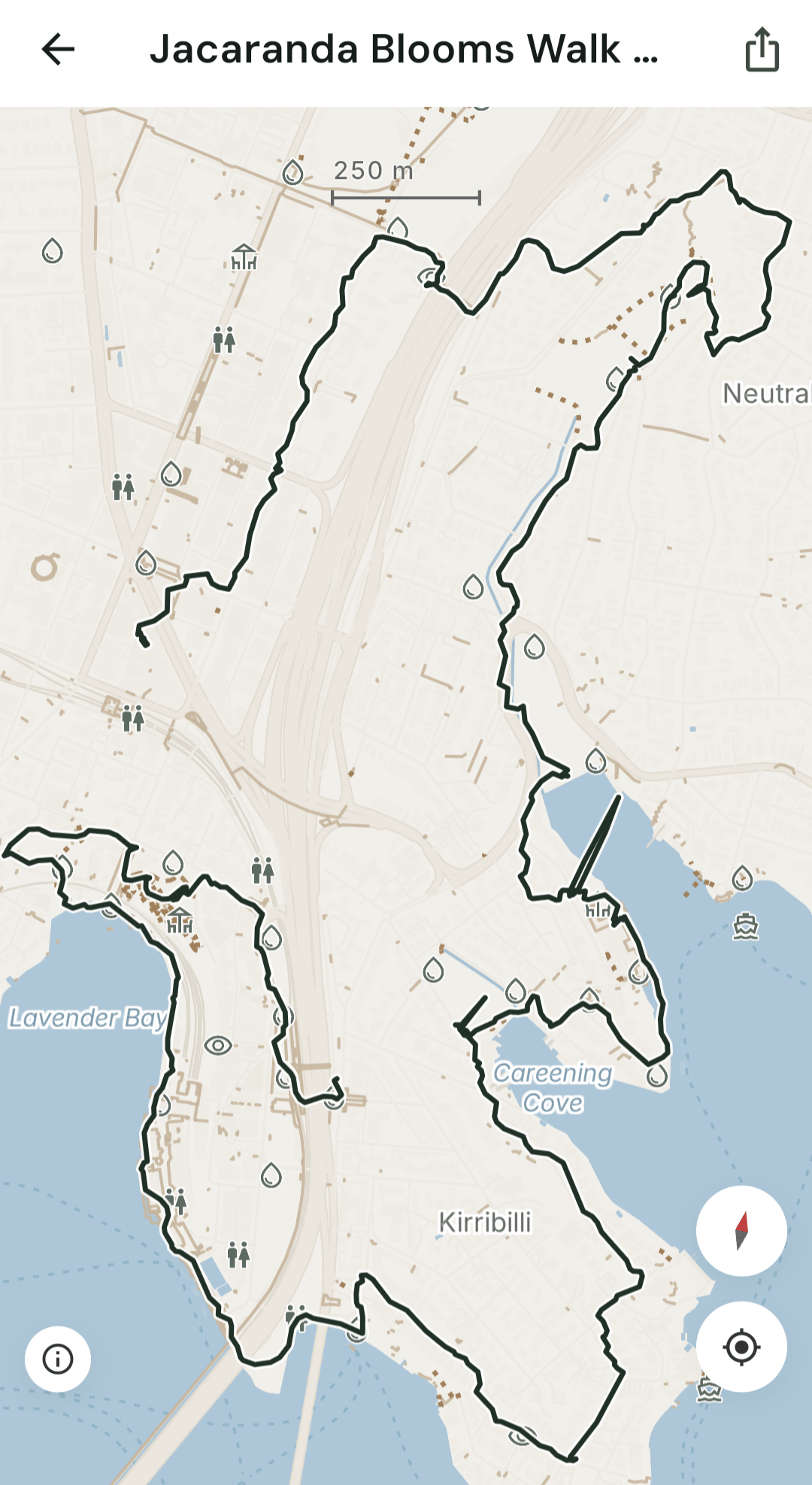
The full map and share card below show our walk, recorded with TrekMeet on 31 October 2026. It connects the jacaranda stops with the harbour paths and streets we explored along the way.
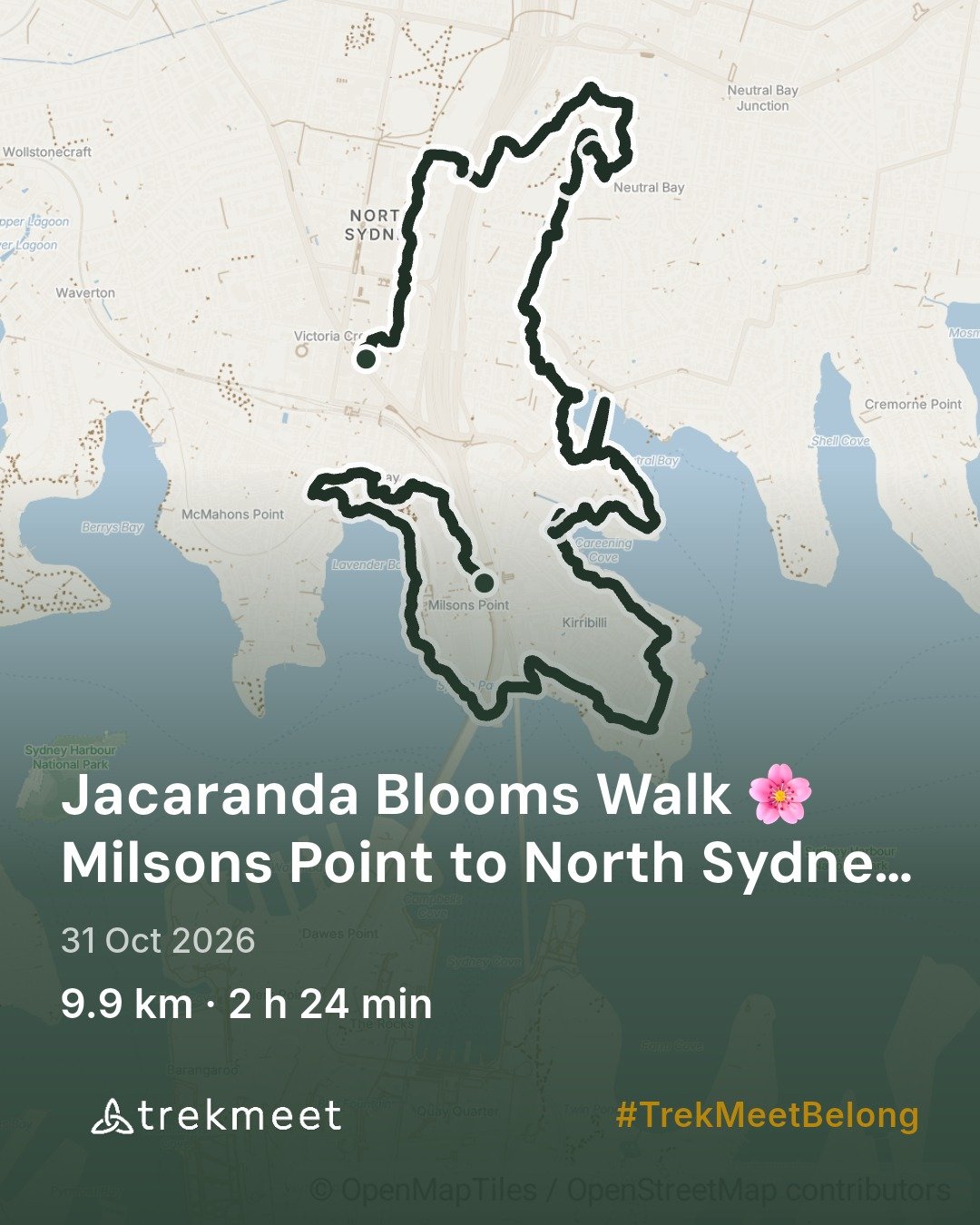
We regularly run free, volunteer-led walks with OZ Outdoors on TrekMeet. If you’d like to join us, have a look at our upcoming events.
The photos in this guide are from our jacaranda walks over the past few years. Flowering varies through the season, so each visit will look a little different.